10-Yard vs 20-Yard Dumpster: Volume, Weight, and Driveway Length
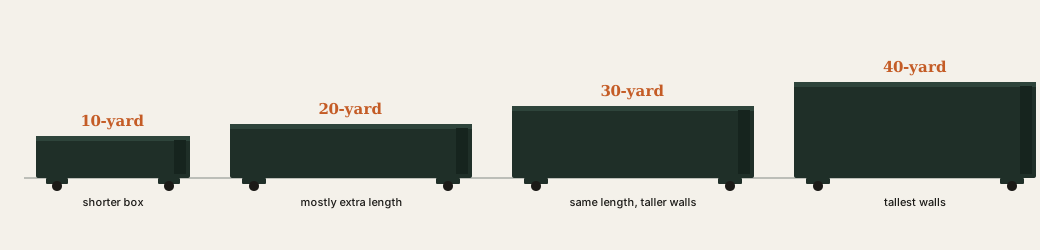
A 20-yard dumpster is not “twice as long.” It is twice the interior volume. The extra steel is mostly length and a little wall height. The bill is often tons.
Dumpsters.com’s typical 10-yard is 14 feet long and 3.5 feet high. Their typical 20-yard is 22 feet long and 4.5 feet high in the prose on the product page — and 4 feet high in a table on that same page. Hometown Dumpster Rental’s typical 10-yard (guide updated November 10, 2025) is 12 feet long and 3.5 feet high; their 20-yard is 22 feet long and 4 feet high.
Eight extra feet of box. A few extra inches of wall. Twice the cubic yards.
Dumpsters.com even spells the length trap out on the 10-yard page: ten yards of length would be 30 feet. A 10-cubic-yard dumpster is not that. It is 10 cubes of 3×3×3 feet — 270 cubic feet of space. It is not 10 feet long. It is not 10 tons.
Different companies will quote you a 10 and a 20 for the same driveway because those are the two residential sizes they actually drop. This page is that fight: volume vs included tons vs whether 22 feet of steel plus a swinging door still leaves you a house. It is not a zip-code form. Where the live charts disagree, the disagreement is the point.
If you need the full 10/15/20/30/40 map, roof-square math, or a bag-versus-box decision, those are separate pages. Links at the end.
Side by side (their typicals, not a national spec)
Roll-offs are sized by internal volume. Dumpsters.com: “our containers are sized according to internal volume. External dimensions can vary depending on the local hauler and dumpster manufacturer.” Hometown, same November 2025 guide: dimensions “are not standardized” and “may vary from one hauler to the next.”
Ask for the box they will actually deliver.
Dumpsters.com typical (fetched August 30, 2026)
Pickup-truck estimates are theirs. They say a standard pickup bed typically holds 2–3 cubic yards.
| Their typical 10-yard | Their typical 20-yard | |
|---|---|---|
| Exterior they publish | 14' L × 7.5' W × 3.5' H | 22' L × 7.5' W × 4.5' H in prose; 4' H in the product-page table |
| Pickup-truck loads (theirs) | 3 | 6 |
| Bags (theirs) | 50–70 “large trash bags” | 110–130 33-gallon bags |
| Included weight on the size chart | 1–2 tons | 2–3 tons |
| Included weight on the product page | Average 2–3 tons (4,000–6,000 lb). Same page: a 10-yard can safely hold up to 10 tons | Table: 2–3 tons. Same page later: more common included limit is 2–4 tons; “most 20 yard dumpsters can handle up to 10 tons” for heavier debris |
| Typical rental window on the product page | 7–10 days | 7–10 days |
Two contradictions to keep, not average:
- 10-yard tons. The size chart says 1–2. The 10-yard product page says average 2–3, and then a 10-ton safe maximum. The 10-ton figure is a different problem (what the steel can carry) from what the quote includes. The contract is the included tons.
- 20-yard height. 4.5 feet in the sentences, 4 feet in the table, same URL. Do not pick a fake average. Measure, or ask.
Their sizes FAQ, still live: a 20-yard “holds about twice as much waste as a 10 yard container but requires slightly more room on your driveway or jobsite.” Ten-yard: tight spaces and heavy debris (bricks, shingles). Twenty-yard: midsize remodels and multi-room cleanouts.
Hometown typical (updated November 10, 2025)
They do not publish a 15-yard row on this chart. Their older how-to (March 2, 2023) lists 15 as a common size. The November chart is 10 / 20 / 30 / 40 only.
| Their typical 10-yard | Their typical 20-yard | |
|---|---|---|
| Exterior they publish | 12 ft L × 8 ft W × 3.5 ft H | 22 ft L × 8 ft W × 4 ft H |
| Pickup-truck loads (theirs) | not listed for the 10 | roughly 10 pickup-truck loads |
| Typical weight allowance | 2–3 tons (4,000–6,000 lb) | 2–4 tons (4,000–8,000 lb) |
Dumpsters.com’s 20-yard is 6 pickup loads. Hometown’s 20-yard is ~10. Same stencil, different truck math. Dumpsters.com is counting a 2–3 cubic-yard bed. Hometown does not show the bed they used. Treat both as that company’s picture, not a tape measure.
Notice the spread on a 10-yard: Dumpsters.com’s typical box is 14 feet long and 7.5 feet wide with 1–2 tons on the chart. Hometown’s is 12 feet long and 8 feet wide with 2–3 tons. The yard number does not lock the tonnage. The quote does.
A third named hauler, Dumpster Enterprises (July 20, 2026), publishes yet another pair: 10-yard 12′ × 8′ × 3.5′, 1–2 tons; 20-yard 22′ × 8′ × 4.5′, 2–3 tons. That is their spec sheet, not a national average. It matches Hometown on 10-yard length and Dumpsters.com’s prose on 20-yard height. The live pages do not agree. That is the useful fact.
Driveway, truck, door swing
The box is not the whole footprint.
Dumpsters.com (10-yard and 20-yard product pages, same numbers on both): keep it on flat pavement. The driver needs at least 60 feet of unobstructed length and 23–25 feet of vertical clearance — no hanging branches, no low wires. Unlock the gate. Their sizes FAQ: 10, 12, 15, and 20-yard bins typically measure 7.5 feet wide and between 14 and 22 feet long, and “usually” fit a standard driveway. Their 30-yard needs a two-car driveway. Street placement: you may need a city permit. Their published permit band: $20–$150 in most places, sometimes more in big metros; occasionally no charge.
Hometown (November 10, 2025): most roll-offs are about 8 feet wide. Length grows as you size up. The back usually has one 8-foot door or two 4-foot doors. Budget another 4–8 feet behind the box if you want to walk a tub or a stack of cabinets through the door.
Dumpster Enterprises (July 20, 2026): both sizes typically 8 feet wide, so width is rarely the fight. Length is. Their 10-yard is about 12 feet; their 20-yard about 22. On a two-car driveway they say the 20 takes one entire side, which often means the cars go to the street for the rental. They also warn that a 20 needs a longer, straighter approach; a wasted trip because the truck cannot place it is, in their words, a fee that can exceed $100. That dollar figure is theirs, dated to that post, not a national tariff.
Practical read: a 10-yard is the one that still fits a short, narrow, or crowded pad. A 20-yard is the one that eats a parking space and then some for the door. The truck is longer than the box. Say so before they dispatch.
Private driveway: Dumpsters.com says a permit is typically not required. Street or sidewalk: ask the city, and ask who pulls the permit.
When a 10-yard is the adult choice
Bigger is not automatically safer. For some piles, the 10-yard is the grown-up box.
Heavy debris. Dumpsters.com’s size page: dense stuff — concrete, brick, dirt, or shingles — should go in a 10-yard, and you fill it only partway. You cannot put heavy materials in every size. Their 10-yard product page is the same idea outdoors: concrete, shingles, a section of driveway. Their “what size” page puts heavy debris and small roofing jobs on the 10. A bigger box with a modest included-tonnage cap is how people get an overage on a load that still has daylight in it.
The 10-ton “safe” maximum on Dumpsters.com’s 10-yard page is not the included allowance. It is what they say the container can physically hold. Mixed-waste quotes on the same site still show 1–2 or 2–3 tons. If the pile is inert fill, ask whether they have a heavy-debris / low-boy rate. Mixed household trash on top of concrete is how a cheap 10-yard becomes a contaminated load.
Tight driveway. Hometown’s typical 10 is 12 feet long; Dumpsters.com’s is 14. Their typical 20 is 22 feet either way. If the pad is short, the 10 is the one that still leaves a walkable path and a swinging door.
Small room, small bath, counters only. Dumpsters.com’s 10-yard page: half bathroom, new kitchen countertops, flooring from a living room, attic, basement, garage, one or two small bedrooms. Their remodel FAQ: bathroom remodels “usually require a 10 yard or 15 yard.” Hometown: a 10-yard “may be appropriate” for a small-to-medium basement/garage/attic, a bathroom renovation, a small kitchen remodel, a deck about 250 sq ft or smaller.
Lower walls. Both national charts put the 10-yard around 3.5 feet high. Dumpster Enterprises’ comparison (July 20, 2026) makes the loading point: you can toss over the side without lifting overhead. That is their reason, not a measurement of your back. It is why a 10 is less miserable for tile, dirt, and broken block.
If the pile is truly under a few light cubic yards, a bag may be enough. That comparison is Bagster vs dumpster — one page, not this one.
When a 20-yard is the adult choice
Dumpsters.com still calls the 20-yard their most popular size (sizes FAQ, 20-yard product page, and the “what size” page). Their reason, in their words: it works for a variety of household projects and fits a standard driveway.
Whole-house / bulky cleanout. Dumpsters.com: for most whole-house cleanouts, a 20-yard is ideal; smaller home or apartment, 15; lots of storage or multi-generational, consider 30. Angi (project table on their dumpster-sizes article; live page blocked by Cloudflare on this pass, so this is from indexed excerpts of that same URL): home cleanout 15 or 20-yard. Hometown: medium basement/garage/attic, flooring or carpet from a large house, a deck around 400 sq ft.
Furniture, bags of clothes, and cardboard fill a box by volume. People look at an empty 20-yard and think they over-ordered. Dumpsters.com’s 10-yard page even admits the other direction: “Many customers also find they end up tossing more than expected once the dumpster is in their driveway.” Cleanouts are the job that under-guesses a 20.
Full kitchen tear-out, mixed bulky remodel. Cabinets, counters, appliances, flooring, drywall. Volume first, unless you are also throwing tile and stone (then ask about tons). See the kitchen section below — the charts do not agree.
Mixed bulky volume you cannot pack like lumber. Couches, mattresses, doors, a garage of oddly shaped stuff. Dumpsters.com’s 20-yard page: a standard three-seat couch fits. Their 10-yard page says a couch fits there too, if laid flat. The 20 is the one that still has room after the couch.
If two companies quote you a 10 and a 20 for the same cleanout, ask each what tons they assumed and whether they think you will run out of space. That usually explains the split.
Kitchen: 10 vs 20 (they do not agree)
This is the leftover argument after “bag or box.” Show the disagreement. Do not average it.
Dumpsters.com, on the same site, points at more than one box:
- Size chart: 15-yard “best for” includes kitchen remodels.
- 12-yard page-level copy (from their sizes hub): remodeling a kitchen.
- “What size” FAQ: “For large kitchen remodels, a 20 yard dumpster typically works well.”
- Sizes-page FAQ, still live: “most people choose a 20 yard” for a kitchen remodel — old cabinets, countertops, flooring, and appliances from a full kitchen tear-out.
Hometown (November 10, 2025): a 10-yard “may be appropriate” for a small kitchen remodel.
Angi (indexed excerpts of https://www.angi.com/articles/dumpster-sizes.htm, August 30, 2026): kitchen remodel 20 or 30-yard. Bathroom 15 or 20.
So a kitchen, on live charts, spans 10, 12, 15, 20, and 30. That is not sloppiness. A cabinet-and-counter swap is mostly bulky wood and laminate. A gut-to-studs kitchen with tile floors, mortar, and a granite slab is a weight problem wearing a volume costume.
Practical read:
- Partial update (counters, or cabinets only): the 10-yard end of the range is the one Hometown is describing. Dumpsters.com’s 10-yard page literally lists “installing new kitchen countertops.”
- Full tear-out of a standard kitchen: Dumpsters.com’s “most people choose 20” is the center of gravity.
- Gut plus adjacent rooms, or lots of masonry: Angi is why 30 is on the table.
If the hauler’s 20-yard only includes 2 tons, and you are throwing stone and tile, ask about included tons before you congratulate yourself on the extra airspace.
Roof: weight, not a longer box
Do not size a roof by “20 is bigger.” Shingles are dense. A 10-yard can be overweight before it looks full. Dumpsters.com’s size FAQ: a 10-yard is their recommendation for roofing materials; fill it partway. Angi (same indexed article): roofing 10 or 20-yard, and they warn that shingles are heavy, so a too-large dumpster can put you over the weight limit. Hometown’s November 2025 guide: about 1,500 sq ft of single-layer shingles on a 10-yard; 2,500–3,000 sq ft single-layer on a 20.
Squares, layers, and 3-tab vs architectural change the tons without changing the footprint of the house. That math lives on What size dumpster do I need?. This page will not reprint it.
Second haul vs sizing up
Hometown’s ultimate guide, still live as of the November 10, 2025 update: if you squeeze into a too-small box, the worst case is paying for two dumpsters and “instantly doubling your intended budget.” Then, in their words: “On average, sizing up costs less than $100 and can easily save you money in the long run.” That is Hometown’s claim, dated to that guide, about stepping up one size at booking. It is not a national tariff, and it is not an overweight fee.
Dumpsters.com’s answer if the box is too small: empty-and-return (swap), or order more than one. Ask what that swap costs here before you “save” on a 10-yard.
Dumpster Enterprises (July 20, 2026) publishes their own picture of the same fork — upgrade often $50–$100, a second dumpster $300–$600+ in their experience. Same shape as Hometown. Still their numbers, not ours.
The other expensive mistake is the reverse: a 20-yard of mixed waste with a 2-ton cap, loaded with tile or wet drywall, that still looks half empty. Size the tons for heavy stuff. Size the yards for bulky light stuff. Do not use one number for both.
What to ask the hauler
Get this in the quote. In writing if you can.
- Included tons for this debris type in this box. Not “the 20-yard.” Dumpsters.com’s own 10-yard pages do not even agree with each other (1–2 vs 2–3). Hometown’s 20-yard is 2–4. The contract is the number that matters.
- Overage per ton. Pro-rated? Rounded up? Different rate for shingles vs mixed C&D?
- The actual L × W × H of the box they will drop. Not the blog chart. Flag Dumpsters.com’s 20-yard 4.5-vs-4-foot height if they send you their marketing page as the spec.
- Door swing. Hometown: extra 4–8 feet behind. One 8-foot door or two 4-foot doors. Can you walk a tub through it?
- Truck clearance. Dumpsters.com: ~60 feet of flat paved length, 23–25 feet overhead. Trees, wires, a low carport: say so.
- Rental days. Dumpsters.com typically 7–10 on both product pages. What is extra per day after that?
- Swap / empty-and-return fee. If you fill it Wednesday and still have a garage.
- Driveway vs street. Who pulls the permit, what it costs, how long it takes. Dumpsters.com’s published band is $20–$150 in most places.
- Heavy vs mixed. Will they accept shingles-only? Concrete in this box? Or do they want a separate inert load?
- Prohibited list for this landfill. Paint, tires, batteries, appliances, e-waste, food. Local extras (mattresses, dirt, yard waste).
If two haulers recommend different sizes, ask each what tons they assumed and what length of box they will deliver. That usually ends the argument.
This page does not need a zip code. It needs those ten answers.
Related
- What size dumpster do I need? — cubic yard vs ton, the full 10/15/20/30/40 chart, kitchen 10-vs-20-vs-30, roof squares × layers, concrete, cleanout, and the expensive mistakes.
- Bagster vs dumpster — if the pile is under about 3 light cubic yards and you are comparing a store-shelf bag to a 10-yard. Shelf price is not the job.
Sources
Fetched August 30, 2026 unless a page carries its own date.
Dumpsters.com (live page body)
- Dumpster sizes — https://www.dumpsters.com/sizes/dumpster-sizes
- 10-yard product page — https://www.dumpsters.com/sizes/10-yard-dumpster
- 20-yard product page — https://www.dumpsters.com/sizes/20-yard-dumpster
- What size dumpster do I need? — https://www.dumpsters.com/resources/what-size-dumpster-do-i-need
Hometown Dumpster Rental (live page body)
- “The Ultimate Guide to Dumpster Sizes,” updated November 10, 2025 — https://www.hometowndumpsterrental.com/blog/the-ultimate-guide-to-dumpster-sizes
- “How to Choose the Right Size Dumpster,” updated March 2, 2023 — https://www.hometowndumpsterrental.com/blog/how-to-choose-the-right-size-dumpster
10 vs 20 comparison posts (live page body; their figures, not a national rate)
- Dumpster Enterprises, “10-Yard vs 20-Yard Dumpster,” July 20, 2026 — https://dumpsterenterprises.com/blog/10-yard-vs-20-yard-dumpster/
- Maggio Environmental, “10 Yard vs 20 Yard Dumpster” — https://www.maggioenvironmental.com/post/10-yard-vs-20-yard-dumpster-which-size-is-right
Angi (search-indexed excerpts of a blocked URL)
- “What Size Dumpster Do I Need?” — https://www.angi.com/articles/dumpster-sizes.htm — Cloudflare blocked a direct fetch. Project table (cleanout 15/20, roofing 10/20, kitchen 20/30, bath 15/20), “20-yard dumpsters being the most common choice for your home cleanouts and renovations,” permit-by-local-rules language, and the $300–$480 range (not used as a rate on this page) taken from indexed excerpts of that same URL.